
The world of digital marketing is changing faster than ever. Artificial Intelligence (AI) has become a powerful part of how content is created, managed, and shared. From writing blog posts and captions to designing visuals and planning ad campaigns, AI tools are helping marketers save time and work smarter.
But here’s an important question every business and marketing agency needs to ask:
Can AI replace human creativity?
The short answer is no—but when used wisely, AI and human creativity together can produce amazing results. In this blog, let’s explore how AI tools are shaping the future of digital marketing, what their limits are, and how to find the perfect balance between automation and imagination.
1. How AI is Transforming Content Creation
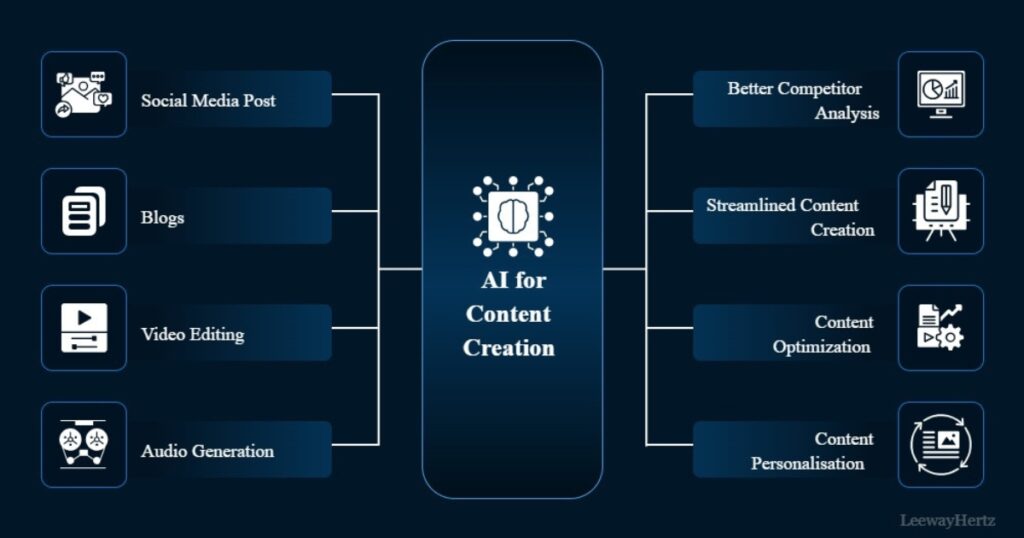
AI tools like ChatGPT, Jasper, Copy.ai, and Canva’s Magic Write have changed the way we approach marketing content. Instead of spending hours writing, brainstorming, or designing from scratch, marketers can now generate ideas, outlines, and visuals in minutes.
Here are some ways AI helps in digital marketing services:
- Faster Content Production: AI can quickly create drafts for blogs, product descriptions, and social media posts.
- SEO Optimization: AI tools suggest keywords, meta descriptions, and even topic ideas that rank better on Google.
- Data-Driven Insights: AI analyzes customer behavior and engagement to tell you what type of content performs best.
- Personalization: It can help you create personalized marketing messages for different customer segments.
Simply put, AI takes care of the technical and repetitive parts of marketing, giving you more time to focus on strategy and creativity.
2. The Limitations of AI Content Tools
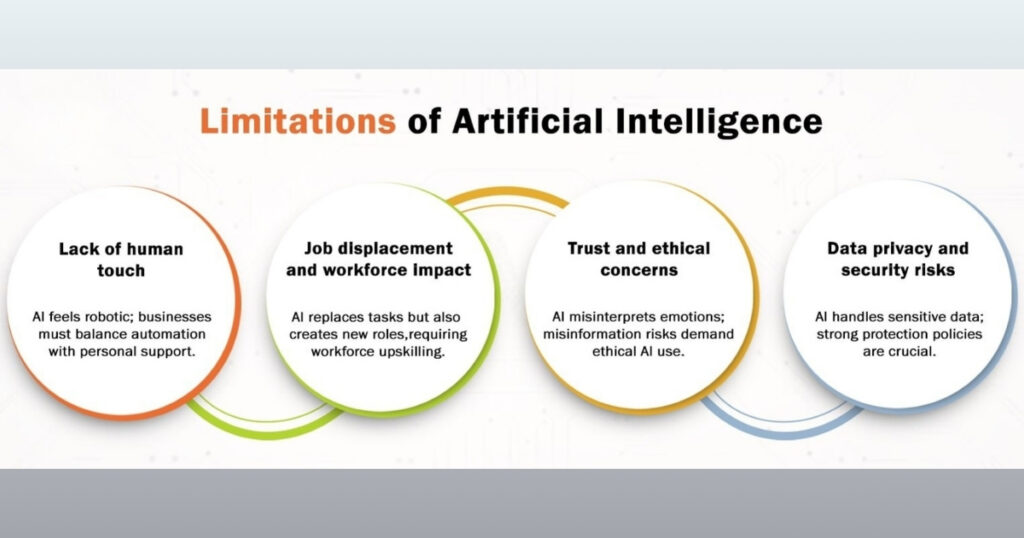
While AI is incredibly smart, it still lacks the human touch that makes content feel authentic and emotional.
Here are a few things AI struggles with:
- Emotion & Empathy: AI doesn’t “feel.” It can’t truly understand humor, pain points, or culture the way humans do.
- Originality: AI learns from existing data—it doesn’t create something completely new or groundbreaking.
- Brand Voice: Every business has a unique tone and style. AI often sounds too generic if not fine-tuned carefully.
- Creativity & Storytelling: Humans bring imagination, storytelling, and emotional connection to content—something machines can’t fully mimic.
That’s why relying only on AI can make your marketing look robotic or repetitive. Customers can tell when content lacks personality.
3. The Power of Human Creativity
Human creativity is what turns simple ideas into powerful campaigns. Think about the most memorable ads you’ve seen—each had emotion, humor, or storytelling that connected with the audience.
In digital marketing, creativity shows up in many ways:
- Writing engaging blogs that connect with real human experiences
- Designing visuals that reflect culture and emotion
- Crafting social media captions that sound natural and personal
- Building campaigns that inspire people to take action
Human marketers bring empathy, originality, and cultural understanding—the qualities that make content truly resonate.
4. Finding the Right Balance Between AI and Humans
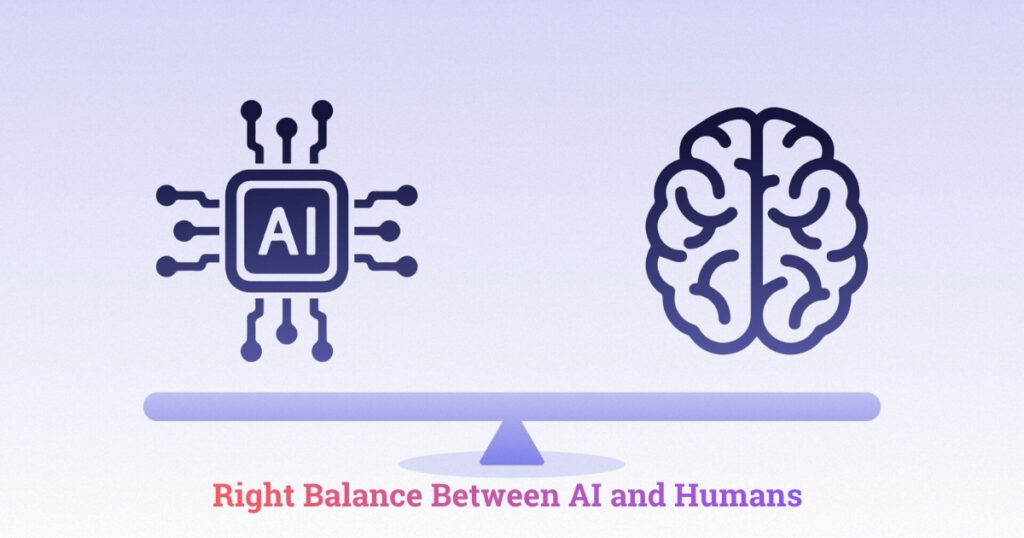
So, how do we combine both worlds? Here are a few practical tips for digital marketing agencies and service providers:
- Use AI for Research and Drafting
Let AI help you with brainstorming, keyword research, and first drafts. It saves time and provides structure. - Add a Human Touch in Editing
Always review and refine AI-generated content. Adjust tone, add storytelling, and ensure it matches your brand voice. - Leverage AI for Analytics, Not Emotions
Use AI for data insights—like what topics are trending or what posts perform best. But let humans decide the message and mood. - Combine Creativity and Data
Use AI data to guide your creative strategy. For example, if AI shows that “how-to videos” perform well, your creative team can design a fun and engaging concept around that insight. - Stay Transparent
If you use AI tools for content creation, be transparent with clients or audiences. Authenticity builds trust.
By blending AI’s efficiency with human creativity, agencies can deliver high-quality, personalized, and emotionally engaging content—faster and smarter.
5. The Future of Content Marketing
Looking ahead, the best marketing services will not be “AI vs humans” but AI + humans. AI will continue to evolve, offering smarter suggestions and automation. But the brands that stand out will be those that keep humans in control of creativity.
Your clients don’t just want content—they want connection, storytelling, and emotion. That’s something only a creative mind can deliver.
Final Thoughts
AI is an amazing assistant, but it’s not a replacement for creative thinkers. As a digital marketing service provider, your goal should be to use AI as a tool, not a crutch. Let technology handle the heavy lifting while you focus on strategy, imagination, and relationships.
In the end, the most successful marketing is still created by humans who understand humans—with a little help from smart AI.